

If you’re considering getting solar panels for your property, you might have found yourself struggling to determine which are the right choice for you. This is especially true if you live on acreage or rural properties in Gympie and the surrounding areas.
The good news is that you don’t need to have to make this decision alone. We’re going to be talking you through the different solar options that you’ve got, what they mean, and providing you with the information that you need to make the right choice for you. So, if you’d like to find out more, feel free to read on.
For Noosa acreage and hinterland properties, our dedicated Noosa solar installation page can help you compare grid-connect solar Noosa options with off-grid alternatives.
What’s the Difference Between Off-Grid and Grid-Connect Solar?
Before you start looking into which option is going to be best for your property, it’s important that you understand what your options actually are, and what they mean.
First, we have off-grid solar. This runs independently from the electricity grid with battery storage and has backup planning in the form of a generator for if this is ever needed. The way this works is by generating electricity during the day from your solar panels, and then storing that in batteries that can be used at night or when you’re not generating enough.
Second, you can look into grid-connected solar, which as you may have already guessed means that it’s connected to the electricity grid, but it can also include batteries. Your solar panels will generate electricity during the day and your home will use this power first. What you don’t use goes into the grid, and if you don’t generate enough, you can draw from the grid also.
When Off-Grid Solar Makes Sense for Acreage Homes
It might be the case that you want full energy independence, and if this is true for you then off-grid solar is going to make more sense. Due to not being connected to the electricity grid, you are relying solely on the energy that you manage to produce.
Grid connection can also be costly in some acreage homes, which means that relying on your own generated electricity is often cheaper than connecting to the grid. This works in areas where you see a lot of sunshine, and you don’t have to panic because you have extra stored energy in those batteries just in case.
In order to set your off-grid solar up though, you need to ensure that you are considering a few key elements, including proper battery sizing to allow you to hold enough power, and seasonal planning. As we’re sure you’re aware, some seasons bring less sunshine, which means less power will be generated by your panels, and you need to plan for that.

When Grid-Connect Solar Is the Better Option

If power is already available to you, then grid-connect might just be the best option for you. It’s not going to cost you much more, if any more to connect to the grid. You will find that grid-connect solar is the better option in instances where you want to lower your bills, without having to give up the comfort of having a backup plan.
As you’re connected to the electricity grid, you don’t have to worry about your solar panels not generating enough electricity sometimes. You can draw from the grid when this happens, meaning you never run out of power.
Which Option Is Right for Your Property?
If you’re looking for a very basic version of an answer, it’s this:

If your home is remote or it’s expensive to connect to the grid – go with off-grid solar. If your goal is bill reduction and there is already an existing supply to your home – go with grid-connect. If you want resilience and backup, grid-connect with batteries may be your best choice.
If you live in an acreage property and you’re interested in solar, then book an appointment with us now. We can offer you a site assessment or quote to determine the right set up for your property, ensuring you get the best on offer.
More Posts You May Find Interesting
Does Grid-Connect Solar Work During a Blackout? Solar, Batteries and Backup Explained It is one of the most common surprises for solar owners. The power goes out, the sun is
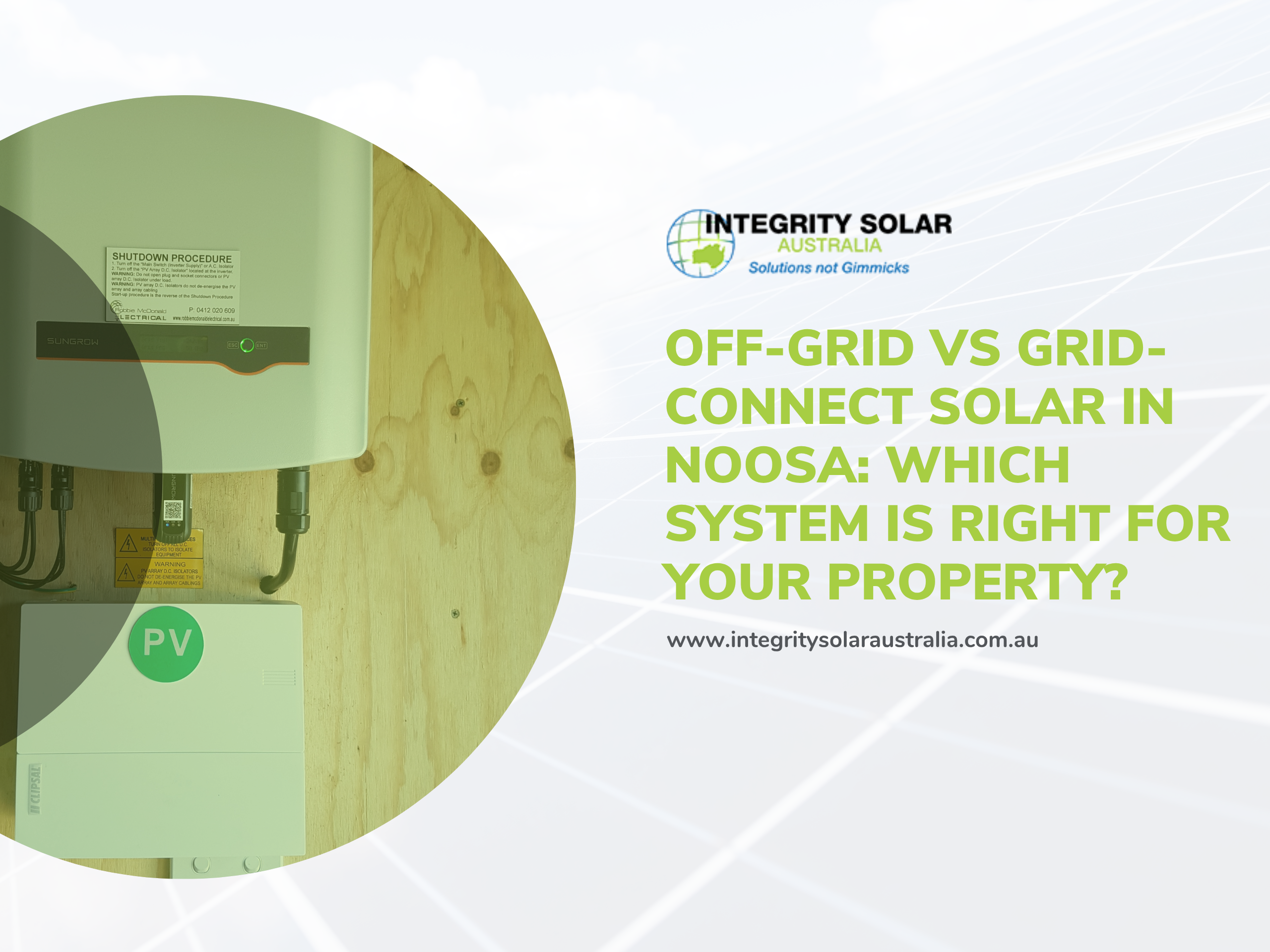
Solar panels are well-known for being an excellent way to reduce electricity costs, improve your carbon footprint, and increase property value, but did you know that there’s more than
If you're planning on going off-grid on a Noosa Hinterland property, you have quite a bit to learn. Sometimes connecting to the electricity grid can be expensive, impractical, or
If you’re considering getting solar panels for your property, you might have found yourself struggling to determine which are the right choice for you. This is especially true if you