

For rural and acreage property owners, an off-grid solar system can provide something the electricity grid cannot always offer: practical energy independence in locations where connecting to the grid may be difficult, expensive, or simply unnecessary.
Across areas such as Gympie, the Noosa Hinterland and South Burnett, off-grid solar is becoming an increasingly practical option for new homes, rural properties and homeowners looking for greater control over their energy supply.
But going off-grid successfully takes more than installing a few solar panels and adding a battery. An effective off-grid solar system needs to be designed around the property, the people living there, their daily electricity use and the conditions the system will experience throughout the year.
So, how much power can an off-grid solar system in Queensland provide?
Queensland Conditions Are Well Suited to Solar
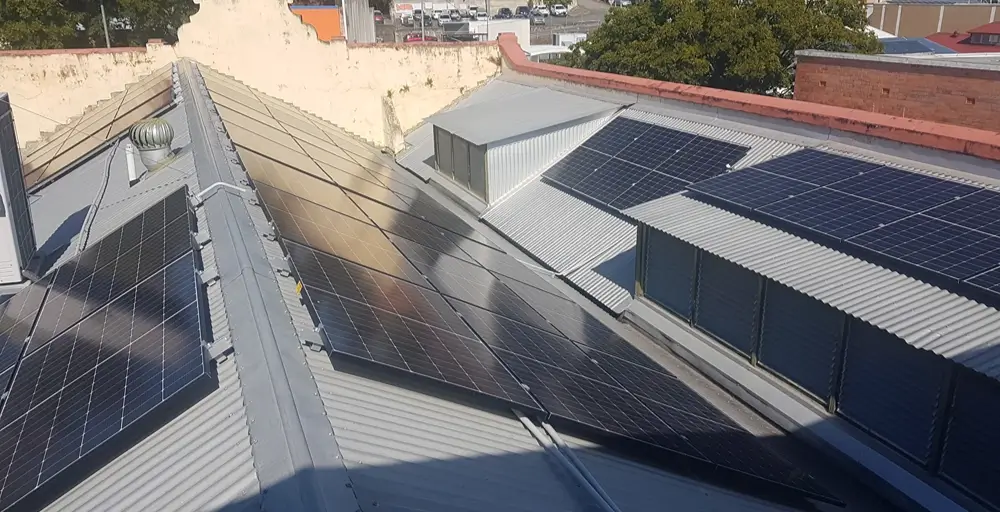
Queensland’s climate provides plenty of opportunity for solar generation, particularly across regional areas such as Gympie and the South Burnett.
Gympie, for example, enjoys a warm subtropical climate and strong sunshine throughout much of the year. A well-designed solar system can generate significant amounts of electricity during daylight hours.
However, off-grid solar needs to be designed around more than a sunny summer day.
Winter brings shorter daylight hours, while extended cloudy or wet periods can reduce solar production. Your system therefore needs sufficient solar generation, battery storage and backup capacity to continue supplying the home when conditions are less favourable.
This is one of the biggest differences between a standard grid-connected system and a properly designed off-grid solar system.
With grid power available, the electricity network effectively acts as your backup. When you’re off-grid, your own system has to do the job.
What Can You Run with an Off-Grid Solar System?
A properly designed off-grid system can power most appliances and equipment found in a modern home.
That can include:
- refrigerators and freezers
- lighting
- televisions and home entertainment
- computers and electronic devices
- washing machines
- water pumps
- kitchen appliances
- energy-efficient air conditioning
- workshop or shed equipment, depending on the system design
The real question isn’t simply what solar can run.
It’s how much electricity your particular household uses, and when you use it?
Two homes that look almost identical can have very different energy requirements.
A couple living on a rural property may have relatively modest energy needs. A family with children, several refrigerators or freezers, air conditioning, pumps, a large workshop and multiple appliances may require considerably more generation and storage.
This is why off-grid solar systems should be designed around actual and expected electricity consumption rather than choosing a standard package and hoping it will be enough.
Battery Storage Is at the Heart of Off-Grid Solar

Solar panels generate electricity when sufficient sunlight is available, but your home still needs power after sunset.
That’s where battery storage becomes essential.
During the day, your solar panels supply the property while surplus energy can be stored in the batteries. At night, or when solar generation drops, the batteries provide the electricity needed to keep the home operating.
Battery capacity therefore needs to reflect more than your total daily electricity consumption.
We also need to consider when you use that electricity.
Evening cooking, air conditioning, lighting, televisions, computers, pumps and other appliances can create significant demand after solar production has fallen away.
Smaller homes may operate comfortably with relatively modest battery capacity, while larger households may require substantially more storage.
The goal is not simply to install the largest battery available. It is to design the solar array and battery bank so they work together efficiently and provide suitable reserve capacity for the property
Why Generator Backup Still Matters
Even a carefully designed off-grid solar system needs to account for unusual conditions.
Several days of poor weather, unusually high electricity use or an unexpected problem can reduce available battery capacity.
For this reason, a backup generator remains an important part of many off-grid solar installations.
Rather than running constantly, the generator acts as a safety net.
Modern systems can be designed so a suitable generator automatically starts when battery levels fall below a predetermined point. It can then support the property’s electricity requirements and help recharge the batteries.
Ideally, the generator should not need to operate often. But when you’re living independently from the electricity grid, having reliable backup can provide considerable peace of mind.
Off-Grid Solar for Acreage and Rural Properties
Off-grid solar is particularly relevant for acreage blocks, rural homes and new builds where extending mains electricity to the property would be costly.
Before choosing a system, it’s worth considering:
- present and future household electricity use
- air conditioning requirements
- refrigerators and freezers
- water and bore pumps
- sheds and workshops
- battery capacity
- generator backup
- available roof or ground space for panels
- expected property expansion
- whether additional buildings will eventually need electricity
Planning for future demand is important.
Installing a system that only just meets today’s electricity requirements can create unnecessary limitations later if the household grows, a shed is added or more electrical equipment is installed.
More Posts You May Find Interesting
For rural and acreage property owners, an off-grid solar system can provide something the electricity grid cannot always offer: practical energy independence in locations where connecting to the grid may
Does Grid-Connect Solar Work During a Blackout? Solar, Batteries and Backup Explained It is one of the most common surprises for solar owners. The power goes out, the sun is
Solar panels are well-known for being an excellent way to reduce electricity costs, improve your carbon footprint, and increase property value, but did you know that there’s more than
If you're planning on going off-grid on a Noosa Hinterland property, you have quite a bit to learn. Sometimes connecting to the electricity grid can be expensive, impractical, or